All the world’s a stage—let’s make it accessible.

ADAPT THE STAGE
Hi, I’m Gray Lancaster.
I am a disabled theatre practitioner, musician, artist, photographer, dancer, and advocate living with Stiff Person Syndrome. I hold a BA in Acting and double minors in Dance and Musical Theatre that I earned while seemingly healthy and able-bodied; I never could have imagined the path my life would take since then.
While grappling with a rapidly progressing, undiagnosed chronic illness during a global pandemic, I watched helplessly as my mobility, voice, and confidence were slowly stripped away. Years went by without treatment, and I did everything I could to mask my struggles. I was so desperate to keep performing as a singer in cover bands that I pushed myself beyond my limit on a regular basis. Pride carried me through bouts of debilitating pain that often left me immobile for days.
Over time, I’ve learned to set aside that pride and embrace mobility aids—first I donned cane, then forearm crutches, a rollator, and now a wheelchair. While I’ve continued performing in live music, the itch to return to my first love was too strong to ignore. I finally went to my first audition and realized instantly that the physical demands of returning to the theatre world would prove to be far more challenging.
The arts hold the extraordinary power to transcend barriers, ignite imaginations, and connect humanity. Yet for far too long, systemic obstacles have excluded disabled individuals from fully experiencing and contributing to theatre. That’s why I founded Adapt the Stage: to ensure all performers have equal access, from the audition room to the rehearsal hall, dressing rooms, and, finally, the stage.
I performed for the first time in my wheelchair in the Clarence Brown Theatre’s production of Kinky Boots. Not only was I the CBT’s first wheelchair user to perform there—I was the first wheelchair user to perform in Kinky Boots, too. I had to advocate for myself at many turns and realized that I wasn’t just advocating for myself, I was advocating for other performers with disabilities who would come through that same theatre and thus, Adapt the Stage began.

My mission began with a sole focus on helping theatres and venues all over the nation become accessible for performers. It’s quite the task in and of itself, but through my journey with chronic illness, I’ve realized that accessibility challenges extend far beyond the theatre. They exist everywhere, woven into the fabric of society. Adapt the Stage believes accessibility isn’t a privilege, kindness, or a courtesy—it’s a fundamental human right.
Our mission is simple yet transformative: when we Adapt the Stage, we Adapt the World. Together, Adapt the Stage aims to create a world where people of all abilities can live full, uninhibited lives, starting with the arts. Imagine venues where no seat is out of reach, stages where every performer can shine—a world that resonates and radiates inclusivity. Through collaboration, innovation, and advocacy, we are dismantling the barriers that perpetuate exclusion and reimagining spaces where everyone can not only witness but participate in the magic of the arts—and of life.
The world may not know it yet but we are still here, we are still capable, and we still have so much to offer. I can still dance Fosse, I can still sing Celine, I can still make someone smile; it may look and sound different than before but it is a truth no person and no disability can ever take truly from me.
Adapt the Stage is more than an idea; it’s a movement. A movement to reframe accessibility as possibility, to empower individuals, and to challenge the status quo. As William Shakespeare famously said, “All the world’s a stage.” Together, let’s make it an accessible one.
Looking for a Disability Consultant to advise in your venue, rehearsal, or upcoming production? Let’s work together!
As both a performer and outside consultant, I’ve worked with regional theatres, community theatres, live music venues, dance instructors, and more to provide Disability and Inclusivity Workshops, speaking engagements, accessibility inspections, and more. I would love to visit with you to help ensure your space is safe for all. Contact me via email at gray@littlegraysea.com to begin our collaboration! Thank you for making the arts and the world a better one.
Why Accessibility & Representation Matter
“I attended kinky boots last night at UT and wanted to reach out! I recently became a wheelchair user and have really struggled with going to new places due to fears of inaccessibility … When you rolled onto stage, my eyes filled with tears of joys, excitement, and belonging. Your rainbow spokes are AMAZING!! I just want to reach out and say thank you for being you” - Heather O.

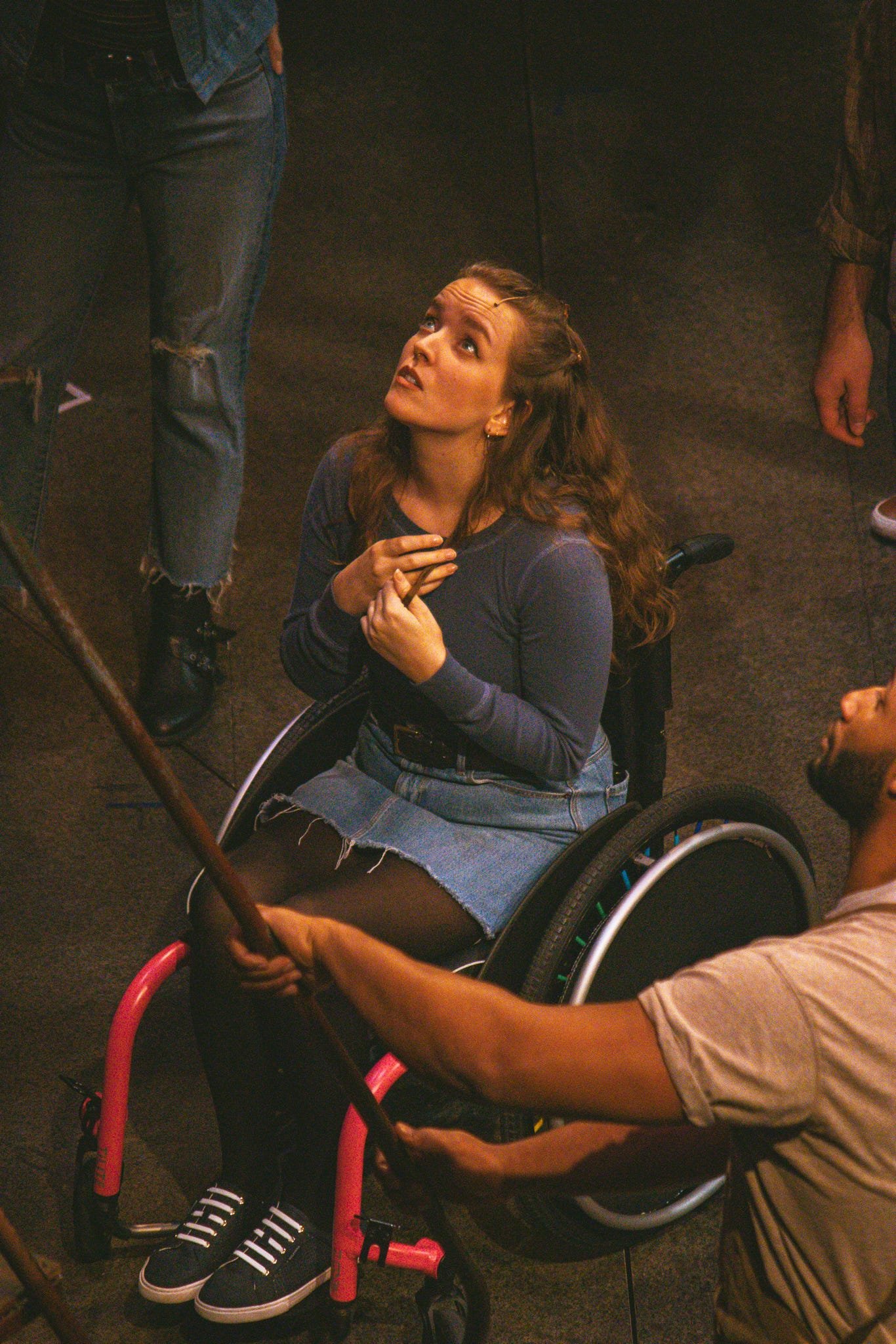

“We were all standing, clapping, & trying to sing along during that powerful final song! I loved seeing you on stage in your cool wheelchair although sometime during the show, I forgot you were in a wheelchair because I was only focused on your expressive face!” - Esther D.

“It was interesting and affirmative to see how easily she performed as part of the cast using her wheelchair. The best part was her constant smile.” - Don B.
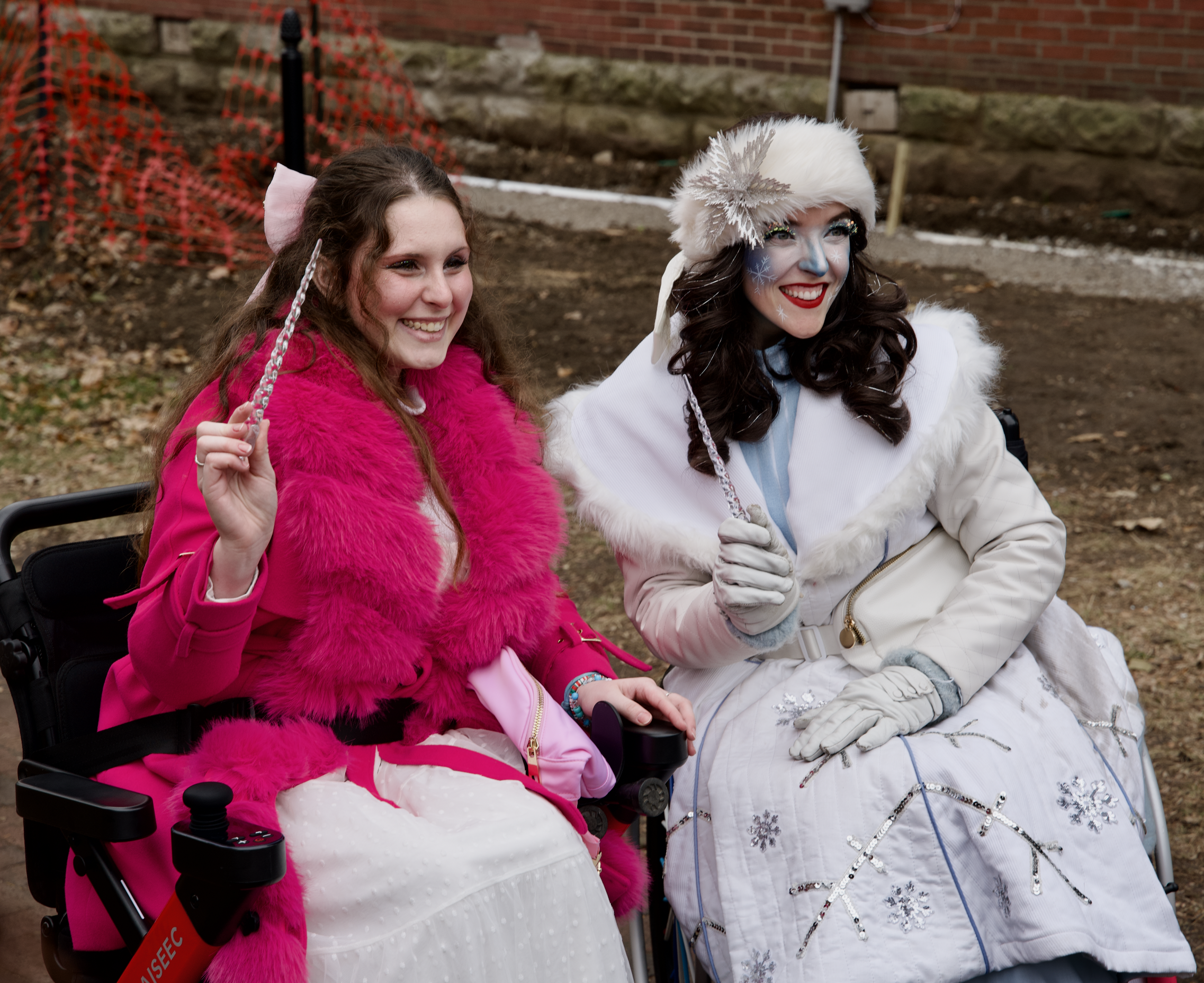
“I think I have a new favorite Legend of Christmas! I’ve been going to Saint Charles Christmas Traditions since I was little and I was so excited to see that Susie Snowflake was a wheelchair user this year! I am thrilled by this representation. In the past, I’ve brought my wheelchair and navigated the festival using it but for the past two years I’ve taken my forearm crutches. When I met her, we bonded over our matching pink mobility aids … next thing I know, I’m given an icicle wand and being named an honorary Legend of Christmas! There’s no place like Historic Saint Charles at Christmas time” - Miranda
Accessibility Remedies
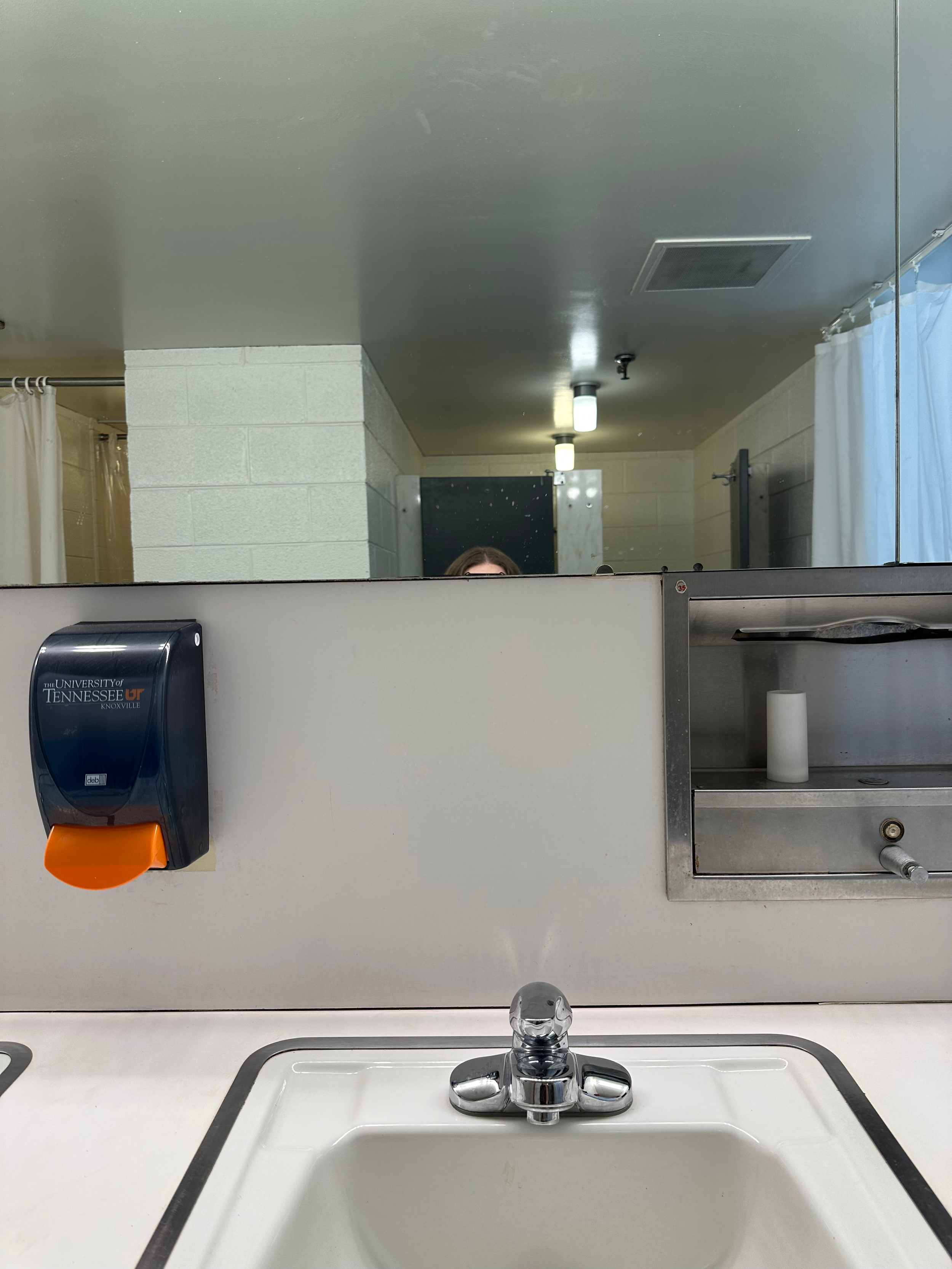
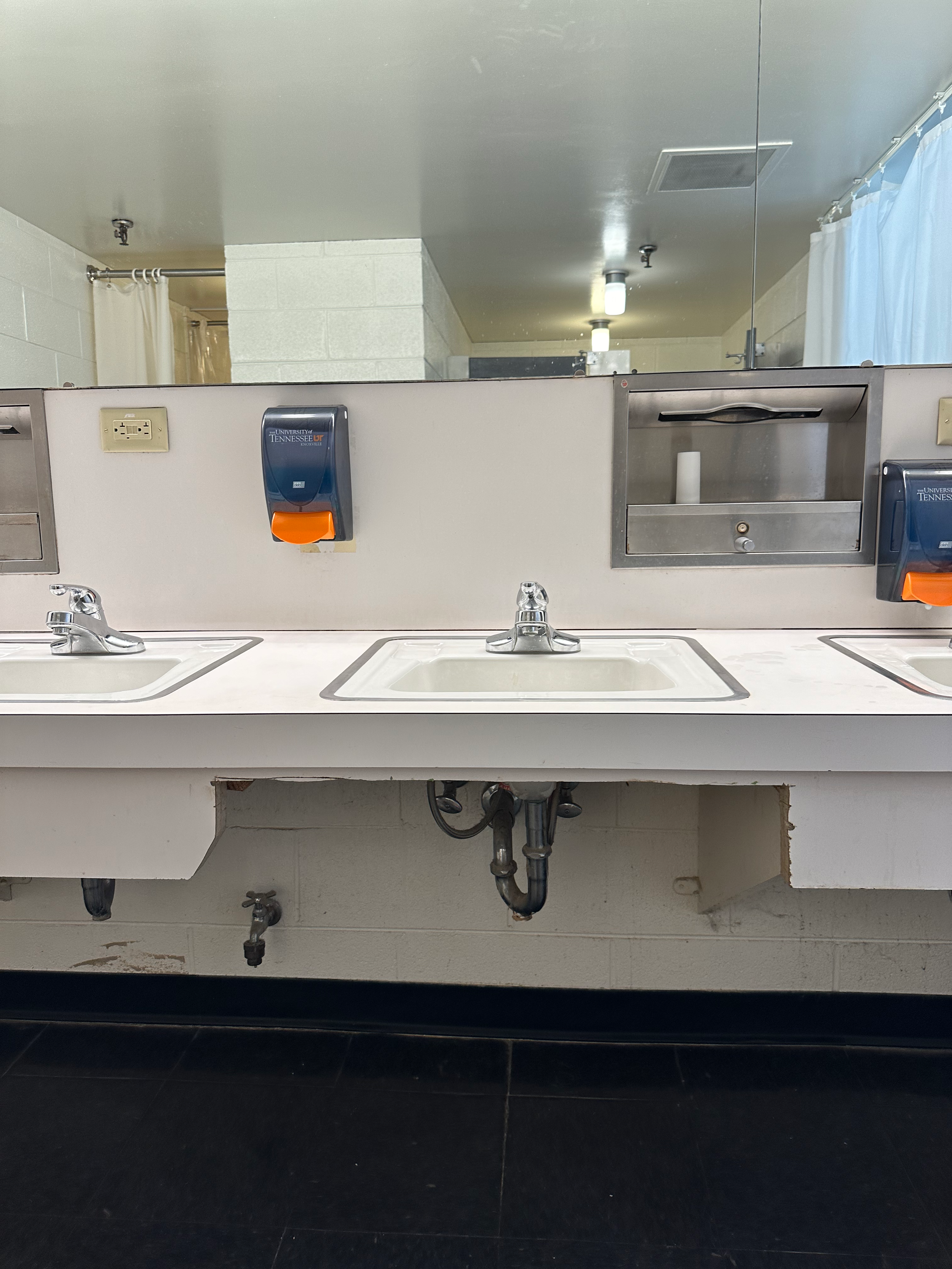
In this bathroom, the countertop edge was too low, making it impossible for a wheelchair user to roll and fit their knees under the sink to wash their hands. When this barrier occurs, wheelchair users are unable to reach the soap, sink, and paper towels.
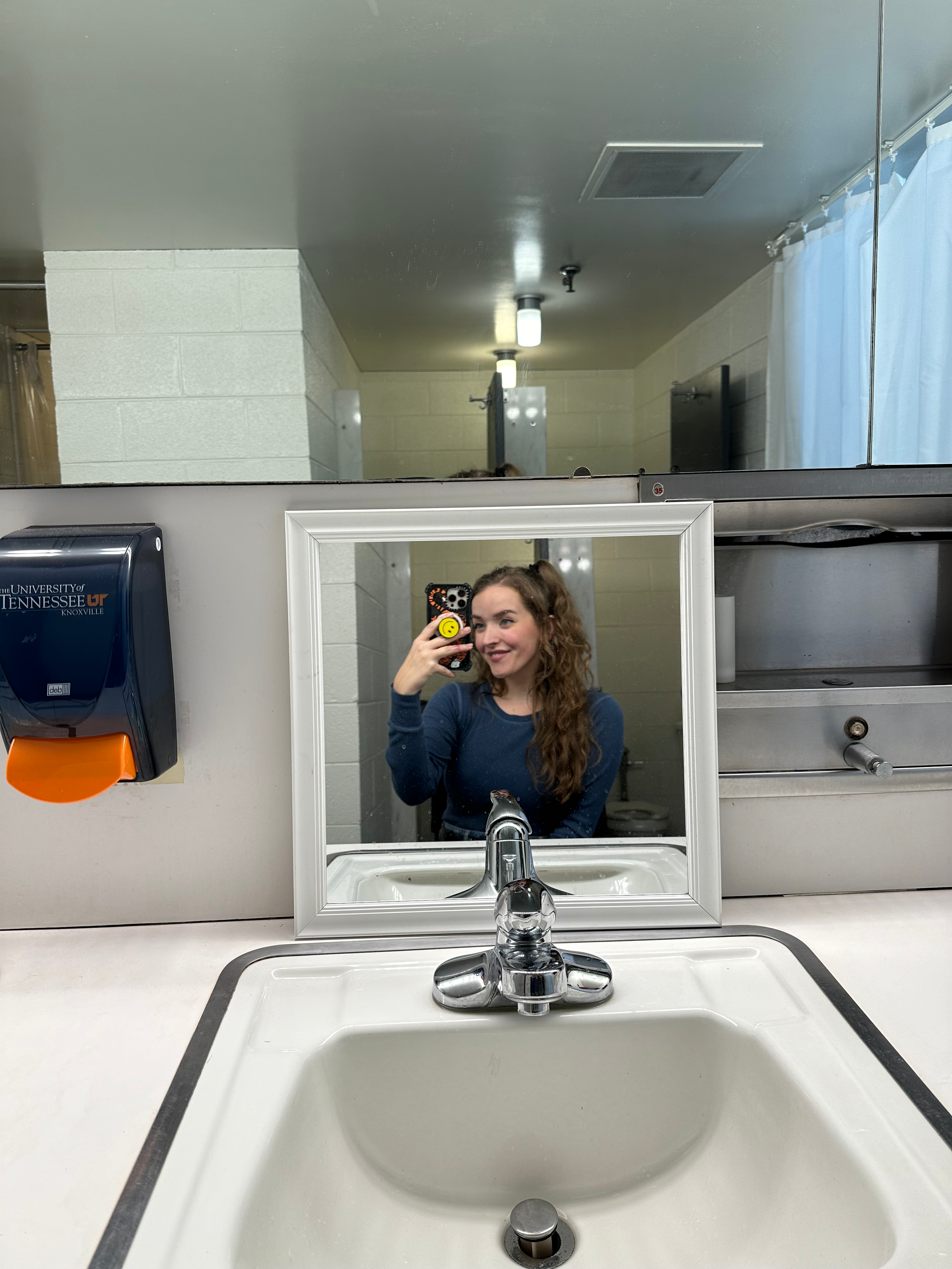
The mirror in this bathroom was also to high for a wheelchair user to be able to see themselves to check their costume, hair, make-up, and so on before heading back to the stage. There were accessible mirrors in the dressing rooms so this may seem like a minor inconvenience but in reality, it means wheelchair users would have to make more trips to and from the bathroom and their designated dressing room than their able bodied counterparts.
To remedy this, a cut out was made below one of the sinks so that a wheelchair user could fit their knees underneath and properly reach the sink, soap, and paper towels, as well as adding a small mirror on the countertop itself—making this area of the bathroom usable for all.
Backstage Bathroom Sink: Before & After
Before
During
After
-
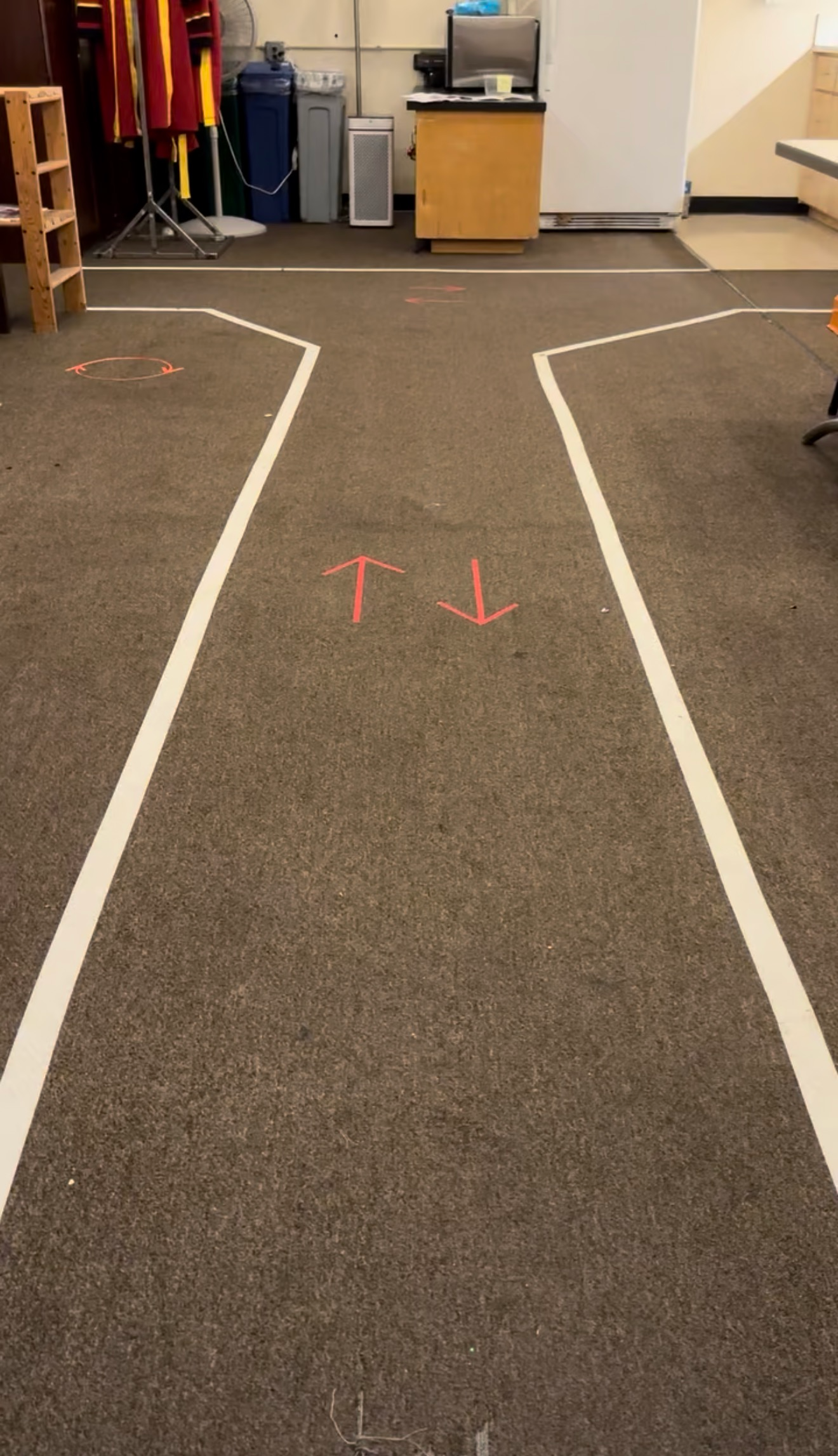
Space was extremely limited in this greenroom due to the size of the cast, the number of costumes, props, and setpieces that moved in and out of the space throughout the show. To ensure the safety and ease of travel for all cast and crew, tape was added to the floor to create a safe walkway (or rollway) that made for clear, safe travel paths in and out of the dressing rooms.
-
To get from the backstage floor to the stage in this theatre, there was a rise higher than what a wheelchair user could navigate themselves over—especially in the dark—and one that could cause issue for anyone with a cane, crutches, or other physical limitations. A good rule of thumb: if an able-bodied person could easily trip over something or find it to be an issue, it’s probably a liability for anyone with a disability. As seen in the video below, while not all taped, very clear pathways are marked with rugs to eliminate any possible blockages from people, props, costumes, or set pieces.
-
In this theatre, a dresser was assigned to all actors for quick changes, but for a wheelchair user, it was important that the dresser meet the actor at their exit or entrance point, instead of the actor having to stress about getting it all done solo or rush back and forth from the dressing room or designated quick change spot. Additionally, with permission, fellow cast members or crew pushed my manual wheelchair from one side of the stage to my next entrance on the opposite side of the stage to ensure entrance times were met. For ambulatory wheelchair users like myself, there was one time where I stood during the show. Transfers in and out of our wheelchairs can be stressful and scary, especially if we do not have help. In this case, an amazing stage manager helped ensure my cane was always in a spot that I could reach before the show (hidden from the audience), helped ensure a safe transfer out of my chair, and then met me at my exit for the end of the number with my chair so that I could be seated again as quickly as possible. If there is not space in your theatre for a wheelchair on both sides, it is important to consider how you will block the beginnings and endings of scenes and dedicated safe entrances and exits to ensure safety for your cast and crew in the wings.
Greenroom, Backstage, Help & Safety
The Greenroom
Backstage
Help & Safety
Let’s work together!
Ready to make sure your show, venue, rehearsal space, and so on are accessible for performers of all abilities? Want to host a workshop with your directors, choreographers, set designers, and actors about how the world of theatre can grow even more inspirationally when disability is represented? We’re ready to help! Fill out the form or send an email to gray@littlegraysea.com to get started.